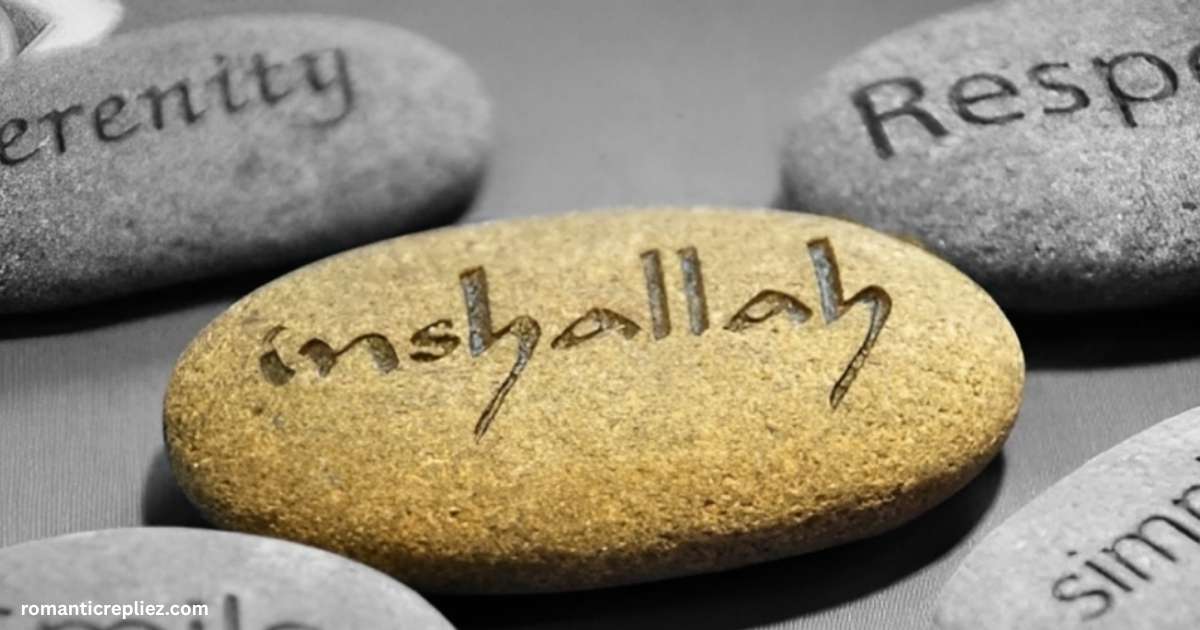
Someone just said “Inshallah” to you. Now what? Do you nod awkwardly? Change the subject? Stay silent? You’re not alone — most people freeze in this exact moment, unsure of the right words to say back.
Here’s the truth: knowing the perfect inshallah reply instantly makes conversations smoother and more meaningful. Whether you’re texting a friend, chatting with family, or navigating a new cultural context, having the right reply for inshallah shows respect and genuine connection. This guide breaks down exactly what to reply to inshallah in any situation — casual, heartfelt, or formal — so you never feel caught off guard again.
Literal Meaning of Inshallah
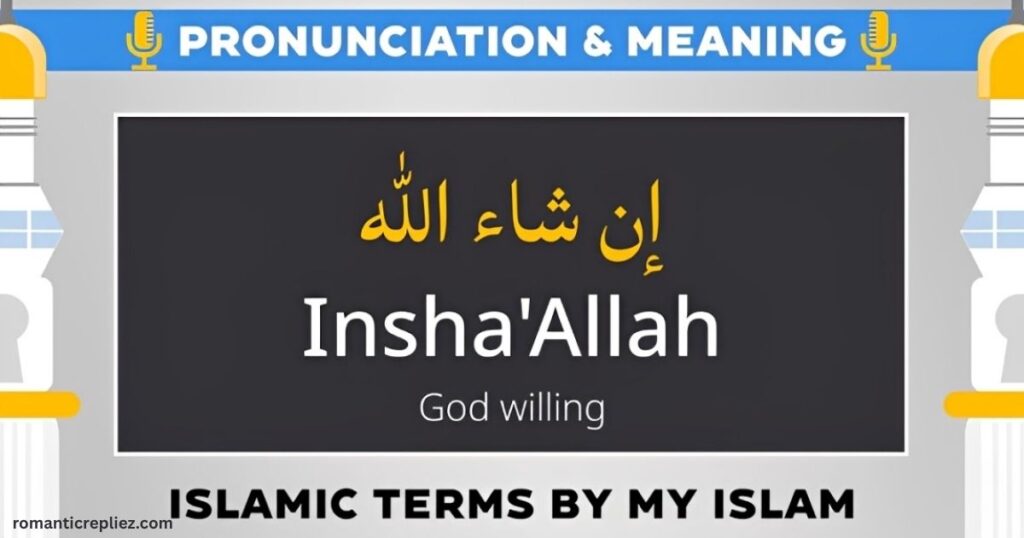
Inshallah comes from Arabic and means “if Allah wills” or “God willing.” It reflects the idea that nothing happens without divine will, no matter how confident someone feels about a plan.
The phrase carries centuries of linguistic and religious history, yet today it lives far beyond religious conversation. People use it casually when talking about weekend plans, job interviews, or even fixing a router. Understanding this dual life, spiritual and everyday, helps you pick the right reply every time.
When People Use Inshallah Daily
People say inshallah when confirming plans, agreeing to meet up, or talking about goals they hope come true.
- Making appointments or plans
- Talking about health or recovery
- Discussing travel or trips
- Wishing someone luck with an exam or job
- Responding to invitations
- Confirming a phone call or meeting
- Discussing weather-dependent plans
- Talking about long-term goals like buying a house
Cultural vs Religious Context
In deeply religious settings, inshallah is a genuine expression of faith and humility, acknowledging that only Allah controls outcomes. In casual daily speech, especially in South Asian and Middle Eastern cultures, it often just softens a promise.
This cultural vs religious context matters because it shapes how firm the commitment actually is. A grandmother saying inshallah before Friday prayers means something different from a coworker saying it about a Monday deadline.
Promise or Uncertainty? Inshallah Explained
Is inshallah a promise or uncertainty? Technically, it’s neither and both. It acknowledges intent while leaving room for outcomes beyond human control.
Some people use it sincerely to express hope tied to faith. Others use it as a polite way to avoid a hard yes or no, which is where the hidden meaning of inshallah gets tricky for newcomers to the phrase.
Psychology Behind Saying Inshallah
Saying inshallah isn’t just a linguistic habit; it’s psychological comfort. It reduces the pressure of guaranteeing an outcome while still showing good intent.
For many speakers, the phrase reflects tawakkaltu ‘ala Allah, the concept of trusting in Allah’s plan after doing your part. This mindset removes anxiety around uncertain futures, whether it’s a wedding date or a college acceptance.
Some psychologists note that phrases like this act as a buffer against disappointment. If a plan falls through, the speaker has already built in acceptance, since the outcome was never fully theirs to control.
How to Respond to Inshallah (Quick Guide)
Wondering how to respond to inshallah in the moment? The safest bet is a short, warm reply that matches the tone of the conversation. You don’t need anything complicated.
Context decides everything here. A reply that works for a friend’s joke won’t fit a formal work email, so match your energy to the setting before you type.
Best Short Replies to Inshallah
- Inshallah, sounds good
- Let’s hope so
- Fingers crossed
- I hope so too
- Ameen
- Sure thing, inshallah
- Sounds like a plan
- We’ll see how it goes
- That works for me
- Looking forward to it
When to Respond Positively
Respond positively when the conversation is upbeat, like travel plans, celebrations, or good news. A simple “inshallah, can’t wait” keeps the mood light and affirms the plan.
Positive responses work well with friends, family, and casual acquaintances. They signal enthusiasm without demanding a hard commitment from either side.
When to Ask for Confirmation
Sometimes, inshallah leaves too much ambiguity, especially for work deadlines or scheduled events. In these cases, it’s fine to gently ask, “Does that mean yes, or should I follow up?”
This works especially well in professional settings where clarity matters more than tone. Asking for confirmation isn’t rude; it just moves the conversation from hope to logistics.
Do’s and Don’ts Quick Table
| Do | Don’t |
| Match the tone of the sender | Assume it’s always a firm yes |
| Use it back if it fits naturally | Overuse it in every single reply |
| Ask politely if you need certainty | Pressure someone for a guarantee |
| Respect the religious meaning | Mock or use it sarcastically with strangers |
| Keep replies short and warm | Write long explanations for casual chats |
| Read the relationship context | Treat every reply the same way |
Common Mistakes to Avoid
A few common slip-ups can make replies feel awkward or disrespectful. Avoid treating inshallah as a joke around people who use it sincerely for faith reasons.
- Overusing inshallah in one reply
- Using a sarcastic tone with strangers
- Ignoring the message instead of replying briefly
- Demanding a hard yes when the context calls for hope, not certainty
- Mixing formal and casual tone in one message
Can You Reply Mashallah to Inshallah?

Can you respond to inshallah with mashallah? Not usually, since the two phrases serve different purposes. Mashallah expresses admiration or gratitude for something that has already happened, while inshallah looks toward the future.
That said, casual chat doesn’t always follow strict rules. If a friend says “inshallah we’ll ace this exam,” and you reply “mashallah, we got this,” it can still land fine in an encouraging, informal context.
- Use mashallah for compliments or good news already happened
- Use inshallah for future hopes or plans
- Mixing them casually is fine among close friends
- Avoid mixing them in formal or religious settings
Best Ameen Reply to Inshallah
The most common ameen reply to inshallah happens in prayer-related or hopeful contexts. Ameen means “so be it” and affirms a wish or prayer someone just expressed.
An inshallah reply ameen works especially well when someone shares a hope tied to health, success, or safety. It shows you share in their wish, not just acknowledge it politely.
When Ameen Fits as a Reply
Use Ameen when the original message includes a wish, prayer, or hope.
- “Inshallah you recover soon” → Ameen
- “Inshallah, the interview goes well” → Ameen ya Rabb
- “Inshallah we meet again soon” → Ameen
- “Inshallah, your family stays safe” → Ameen
It fits less naturally for scheduling messages like “I’ll pick you up at 5, inshallah,” where “sounds good” works better.
Ameen vs Inshallah Khair Reply
| Ameen | Inshallah Khair |
| Affirms a wish or prayer | Expresses hope for a good outcome |
| Used after someone’s hopeful statement | Used when the outcome feels uncertain or worrying |
| Short, standalone response | Often paired with reassurance |
| Example: “Get well soon, inshallah” → “Ameen” | Example: “Test results tomorrow” → “Inshallah khair” |
Reply to Alhamdulillah Explained
What is the reply of alhamdulillah? Alhamdulillah means “praise be to Allah” and is usually said after good news or when someone asks how you’re doing. There isn’t one fixed reply, but common responses work well in most contexts.
- Alhamdulillah, happy for you
- That’s great to hear
- Glad things are going well
- Alhamdulillah for that
I’m Good Alhamdulillah Reply Guide
The phrase “I’m good alhamdulillah” is a common answer to “how are you,” blending a check-in with a small note of gratitude. If someone says this to you, a fitting reply keeps the same warmth.
- Alhamdulillah, glad to hear that
- That’s good to know
- Happy you’re doing well
- Same here, alhamdulillah
Mashallah Reply With Jazakallah
A mashallah reply, jazakallah pairing often shows up when someone compliments you or your achievement. If a friend says “mashallah, you did so well,” replying “jazakallah” is a graceful way to say thanks.
- Jazakallah
- Jazakallahu khairan
- Thank you, that means a lot
- Appreciate the kind words
Inshallah Reply in Arabic Script

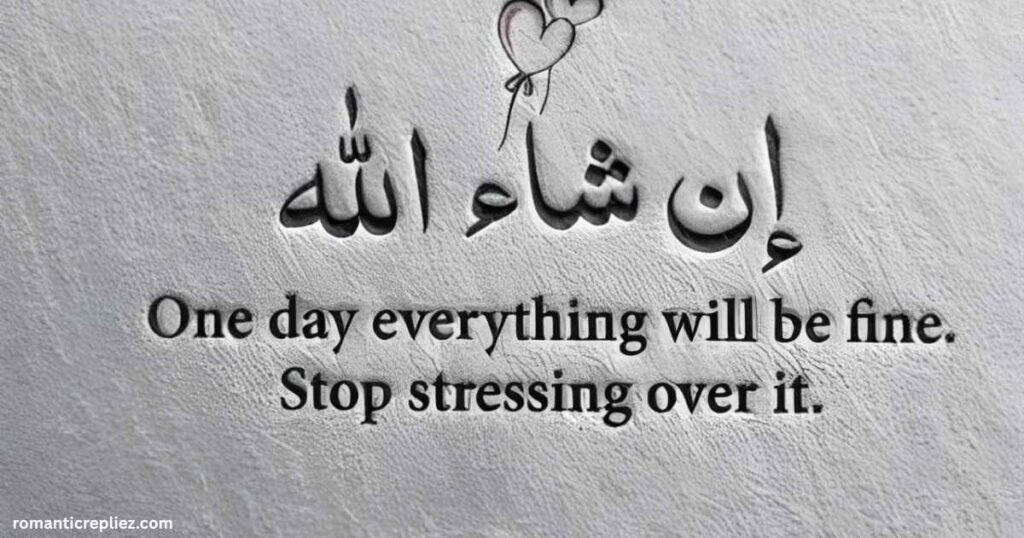
For those wanting an inshallah reply in Arabic, the phrase itself is written as إن شاء الله. Common replies also have Arabic script forms used in text and messaging apps.
- آمين (Ameen)
- ما شاء الله (Mashallah)
- الحمد لله (Alhamdulillah)
- جزاك الله خيرا (Jazakallahu khairan)
Transliteration of Common Replies
Many users prefer typing phrases in Roman letters rather than Arabic script, especially in casual chat.
- Inshallah, khair
- Ameen ya Rabb
- Jazakallahu khairan
- Alhamdulillah
- Tawakkaltu ala Allah
- Barakallahu feek
How to Respond to Inshallah Bisalama
Inshallah bisalama means “God willing, safely,” often said before travel. A fitting inshallah bisalama response acknowledges the safety wish directly.
- Ameen, safe travels to you too
- Inshallah, we’ll arrive safely
- Thank you, take care on the road
- Ameen, see you soon
Short & Simple Inshallah Responses
Short replies work best for quick chats, texts, and comment sections where a long response feels out of place. They keep the conversation moving without losing warmth.
These short and simple inshallah responses fit almost any casual exchange, whether it’s a group chat or a quick text back.
- Inshallah
- Sounds good
- Let’s see
- Hope so
- Ameen
- Sure thing
- We’ll find out
- Okay, inshallah
- Noted, inshallah
- Fingers crossed
- That works
- Looking forward to it
- Inshallah, see you then
- Alright, inshallah
- Deal
Polite & Respectful Inshallah Replies
Polite replies suit conversations with elders, teachers, or anyone you want to address respectfully. They keep warmth without sounding too casual.
A polite response to inshallah often includes a small gesture of gratitude or acknowledgment, especially in formal or respectful relationships.
- Thank you, inshallah, that works well
- I appreciate that, inshallah
- Inshallah, I’ll do my best
- That sounds wonderful, inshallah
- Inshallah, with your blessings
- Thank you for the kind wish
- Inshallah, I look forward to it
- I hope so as well, inshallah
- Inshallah, God willing
- That would be a blessing, inshallah
- Inshallah, I’ll keep you posted
- Much appreciated, inshallah
- Inshallah, we’ll make it happen
- I’m grateful for that, inshallah
- Inshallah, all will be well
Friendly & Casual Inshallah Responses
Casual responses fit conversations with friends, siblings, or close peers where the tone is relaxed. Humor and warmth blend naturally here.
A friendly reply doesn’t need to be complicated. Keep it light and match the same relaxed energy your friend used.
- Yeah, inshallah, let’s do it
- Inshallah, bro, count me in
- For sure, inshallah
- Inshallah, let’s make it happen
- Haha, inshallah, we’ll see
- Inshallah, I’m down
- Let’s plan it, inshallah
- Inshallah, sounds fun
- I’m in, inshallah
- Inshallah, let’s not jinx it
- Inshallah, this is happening
- Okay deal, inshallah
- Inshallah, I’ll hold you to it
- Let’s hope so, inshallah
- Inshallah, can’t wait for this
Funny & Witty Inshallah Replies
Funny replies work well among close friends who understand the joking undertone inshallah can carry, especially the sarcastic use of inshallah when plans seem unlikely.
These replies play on the fact that inshallah sometimes means “probably not,” which is a running joke in many communities.
- Inshallah, meaning next year
- Sure, inshallah, see you never
- Inshallah, the classic maybe
- That’s a soft no, inshallah
- Inshallah, the ultimate plot twist
- Inshallah, translation: we’ll see
- Inshallah, my favorite non-promise
- Inshallah, loading forever
- Inshallah, in this lifetime, hopefully
- Big inshallah energy today
- Inshallah, the universal snooze button
- Inshallah, said with zero confidence
- Inshallah, the polite escape hatch
- Inshallah, buffering
- Inshallah, TBD
Positive & Encouraging Responses
Encouraging replies work best when someone shares a hopeful goal, like a job interview or recovery from illness. They reinforce optimism without sounding forced.
These positive and encouraging responses show genuine support while keeping the door open for whatever outcome comes next.
- Inshallah, you’ve got this
- I believe it’ll work out, inshallah
- Inshallah, good things are coming
- You deserve this, inshallah
- Inshallah, everything will fall into place
- Stay hopeful, inshallah
- Inshallah, your hard work will pay off
- Sending good energy, inshallah
- Inshallah, this is your moment
- Trust the process, inshallah
- Inshallah, brighter days ahead
- You’ll do great, inshallah
- Inshallah, keep the faith
- Good things take time, inshallah
- Inshallah, it’s all falling into place
Islamic & Religious Inshallah Replies
Religious replies suit conversations rooted in faith, prayer, or spiritual reflection. They often reference trust in Allah’s will directly.
These Islamic and religious inshallah replies work well among practicing Muslims discussing prayer, health, or major life decisions.
- Ameen, Allah knows best
- Inshallah, tawakkaltu ala Allah
- Ameen ya Rabb al-alameen
- Inshallah, may Allah make it easy
- Barakallahu feek, inshallah
- Ameen, whatever Allah wills
- Inshallah, trusting in Allah’s plan
- May Allah grant you khair, inshallah
- Ameen, by Allah’s mercy
- Inshallah, Allah’s timing is perfect
- Ameen, may it be written for you
- Inshallah, we leave it to Allah
- May Allah ease your path, ameen
- Inshallah, with Allah’s permission
- Ameen, Allahumma ameen
Professional & Formal Inshallah Replies
Formal replies fit workplace emails, client conversations, or academic settings where clarity matters as much as tone. Keep these polished and direct.
A professional and formal inshallah reply should confirm the plan clearly while still respecting the phrase’s tone.
- Understood, inshallah we’ll proceed as planned
- Inshallah, I’ll have this ready by the deadline
- Noted, inshallah, the meeting will go ahead
- Inshallah, I’ll follow up with an update
- Thank you, inshallah, this will be resolved soon
- Inshallah, we remain on schedule
- I’ll confirm shortly, inshallah
- Inshallah, the project stays on track
- Appreciated, inshallah we’ll finalize this week
- Inshallah, I’ll keep you informed
- Noted with thanks, inshallah
- Inshallah, we’ll revisit this next week
- I’ll ensure this is completed, inshallah
- Inshallah, looking forward to the outcome
- Thank you for the update, inshallah
Romantic & Flirty Inshallah Responses
Romantic replies suit close relationships where playful affection fits the tone. They soften the phrase’s uncertainty with warmth and closeness.
These romantic and flirty inshallah responses work well in private chats between partners discussing plans together.
- Inshallah, I can’t wait to see you
- Inshallah, we’ll make it happen together
- Inshallah, this is our forever
- With you, inshallah, always
- Inshallah, every plan feels better with you
- Inshallah, our story keeps getting better
- I’m holding onto that, inshallah
- Inshallah, you and I, always
- Inshallah, counting down the days
- Inshallah, meant to be
- Inshallah, my favorite kind of hope
- With Allah’s blessing, inshallah, us
- Inshallah, wherever life takes us, together
- Inshallah, this feels right
- Inshallah, forever starts here
Long & Thoughtful Inshallah Replies
Some situations call for a longer reply, especially when someone shares something emotionally significant like health struggles, a big decision, or a personal milestone.
Long and thoughtful inshallah replies show you took time to actually reflect on what they shared instead of typing something automatic.
- Inshallah, everything you’re hoping for will come true at the right time, and I’m here for you through it
- I know this means a lot to you, inshallah it all works out exactly as you’ve been praying for
- Inshallah, whatever happens, I believe you’re moving in the right direction, and I’m proud of you
- Inshallah, this chapter closes well, and a better one begins right after it
- Inshallah, I’ll be thinking of you and hoping every step falls into place
Inshallah Responses Based on Situation
Different situations call for different tones, whether it’s a fun trip, a stressful project, or a health update. Matching context keeps your reply relevant and genuine.
Below are situational replies broken down by common categories people message about daily.
Replies for Plans & Invitations
- Inshallah, I’ll be there
- Count me in, inshallah
- Inshallah, save me a seat
- Sounds fun, inshallah I’ll make it
- Inshallah, let’s finalize the time
- I’ll try my best, inshallah
- Inshallah, looking forward to it
- Let’s confirm closer to the date, inshallah
For Work & Projects
- Inshallah, I’ll submit it on time
- Noted, inshallah we’ll hit the deadline
- Inshallah, the client will be satisfied
- I’ll update the team, inshallah
- Inshallah, this phase wraps up smoothly
- Let’s sync tomorrow, inshallah
- Inshallah, the review goes well
- I’ll send the draft tonight, inshallah
For Travel Plans
- Inshallah, safe travels
- Ameen, have a smooth flight
- Inshallah, we’ll land on time
- Text me when you arrive, inshallah
- Inshallah, the trip goes as planned
- Enjoy every moment, inshallah
- Inshallah, no delays this time
- Safe journey, inshallah bisalama
Replies for Health & Wellbeing
- Ameen, get well soon
- Inshallah, full recovery ahead
- Ameen ya Rabb, feel better
- Inshallah, the results come back good
- Sending prayers, Ameen
- Inshallah, khair for the test results
- Take care of yourself, inshallah
- Ameen, may Allah heal you fully
Replies for Events & Occasions
- Inshallah, it’ll be a beautiful day
- Ameen, congratulations in advance
- Inshallah, everything comes together perfectly
- Can’t wait to celebrate, inshallah
- Inshallah, the event goes smoothly
- Ameen, may it be memorable
- Inshallah, see you at the celebration
- Wishing you the best, inshallah
Inshallah Responses Based on Relationship

The right reply also depends on who you’re talking to. A message to a close friend should sound different from one to a teacher or boss.
Here’s how tone shifts across common relationship types.
Replies for Friends
- Inshallah, bro, let’s make it happen
- Yeah, inshallah, I’m down
- Inshallah, we’re doing this
- Let’s see, inshallah
- Inshallah, don’t flake on me
- Deal, inshallah
- Inshallah, this is happening for real
- Count on it, inshallah
For Family
- Inshallah, I’ll be home soon
- Ameen, love you too
- Inshallah, we’ll all be together
- Inshallah, take care until then
- Ameen, may Allah bless our family
- Inshallah, see you at dinner
- Inshallah, everything will work out for us
- Ameen, thank you for the dua
Replies for Elders & Teachers
- Inshallah, I’ll complete it respectfully
- Thank you for your guidance, inshallah
- Inshallah, I’ll follow your advice
- Ameen, thank you for the blessing
- Inshallah, I’ll make you proud
- I appreciate your patience, inshallah
- Inshallah, I’ll do my best for you
- Ameen, may Allah reward your efforts
Replies for Colleagues
- Inshallah, I’ll have it ready
- Noted, inshallah we’ll align on this
- Inshallah, the deadline stays on track
- I’ll loop you in, inshallah
- Inshallah, this goes smoothly for the team
- Sounds good, inshallah
- Inshallah, let’s revisit after the meeting
- Appreciate it, inshallah
You may also like: Happy 17th Birthday Daughter: 200+ Heartfelt Wishes for This Milestone Year
Platform-Specific Reply Tips
Where you’re replying changes how the message should feel. A WhatsApp text allows more warmth, while a public comment calls for something shorter and neutral.
Knowing the platform helps you avoid sounding too formal in casual spaces or too casual in professional ones.
WhatsApp & Text Reply Style
- Keep it short and warm
- Emojis are fine for close contacts
- Voice notes work well for longer thoughts
- Avoid long paragraphs in quick chats
- Match the sender’s tone closely
- Use Ameen for prayer-related texts
- Keep formal texts brief but respectful
- Reply promptly to keep the conversation flowing
Instagram & Comment Reply Style
- Keep public comments short and neutral
- Avoid overly personal replies in public threads
- Use simple phrases like “ameen” or “inshallah”
- Skip inside jokes strangers won’t understand
- Reply quickly to boost engagement
- Use emojis sparingly for warmth
- Avoid controversial or sarcastic tones publicly
- Tag the person if continuing privately
Reply Strategies for More Engagement
Good replies don’t just answer; they keep conversations going. A short question or added detail invites the other person to respond again.
- Add a follow-up question after your reply
- Use their name to personalize the response
- Mirror their tone and energy
- Avoid one-word replies in ongoing conversations
- Reply within a reasonable time frame
- Use humor sparingly and appropriately
- End with an open-ended thought when possible
- Acknowledge specific details they mentioned
Dealing With Rude or Sarcastic Replies
Sometimes people use inshallah sarcastically or dismissively, especially online. Responding calmly avoids escalating the tone.
- Stay neutral instead of matching sarcasm
- Ask a clarifying question if intent is unclear
- Avoid public arguments over tone
- Respond briefly and move on
- Don’t take casual sarcasm personally
- Clarify your intent if misunderstood
- Disengage if the reply feels hostile
- Keep your own tone respectful regardless
Inshallah Reply Etiquette Rules
Etiquette shifts slightly depending on the setting, but a few core rules apply almost everywhere.
- Match the emotional weight of the original message
- Avoid mocking the religious use of the phrase
- Don’t overuse it to the point of insincerity
- Respect elders and teachers with extra warmth
- Keep public replies shorter than private ones
- Use a sincere tone in health or loss situations
- Save humor for close, casual relationships
- Confirm plans clearly when certainty matters
What to Say Instead of Inshallah

Not everyone uses or wants to use inshallah, and that’s completely fine. Several phrases carry similar meaning in both Islamic and non-religious contexts.
Choosing an alternative depends on whether you want a spiritual tone or a purely casual one.
Similar Islamic Phrases
- Tawakkaltu ala Allah
- Barakallahu feek
- Ameen ya Rabb
- Alhamdulillah
- Mashallah
- Subhanallah
English Alternative Phrases
- Hopefully
- Fingers crossed
- Let’s see
- I hope so
- With any luck
- We’ll find out
When Inshallah Means Uncertainty
Sometimes, inshallah signals genuine uncertainty rather than firm intent, especially when someone avoids a direct commitment. Recognizing this tone helps you respond appropriately.
Understanding uncertainty vs promise in this phrase prevents miscommunication, especially across cultures where the phrase is used differently.
Cultural Nuance Explained
Different communities use inshallah with varying levels of seriousness. In some cultures, it’s treated as a near-certain yes, while in others it softly implies “probably not.”
- South Asian usage often leans casual
- Middle Eastern usage often leans devotional
- Younger generations use it more loosely online
- Context and relationship shape the actual meaning
How to Interpret the Tone
- Notice the speaker’s usual communication style
- Consider whether the topic is serious or casual
- Look for follow-up confirmation as a signal of seriousness
- Ask directly if the plan requires certainty
Real-Life Reply Examples
- Friend: “Inshallah I’ll pay you back Friday” → “Sounds good, just remind me if needed”
- Coworker: “Inshallah the report’s done by noon” → “Great, let me know if you need help”
- Parent: “Inshallah we’ll visit soon” → “Ameen, we’d love that”
- Stranger online: “Inshallah I’ll follow through” → “Looking forward to it”
Best One-Line Inshallah Responses
Sometimes you just need one clean line that works anywhere, without much thought.
- Inshallah, sounds good
- Ameen, thank you
- Let’s see how it goes
- Inshallah, looking forward to it
- Fingers crossed, inshallah
- Inshallah, we’ll make it work
- Ameen, appreciate the wish
- Inshallah, count me in
- Hope so too, inshallah
- Inshallah, see you then
- Ameen ya Rabb
- Inshallah, take care until then
- Sounds like a plan, inshallah
- Inshallah, thank you for that
- Ameen, may it happen soon
Frequently Asked Questions
How can you respond to Inshallah?
A common inshallah reply is simply “Ameen” or “Inshallah” back, showing agreement, hope, and trust that God’s will shall prevail together.
Is Mashallah a response to Inshallah?
No, Mashallah expresses admiration for something already happened, while a fitting inshallah reply such as “Ameen” suits future hopeful plans or wishes instead.
Can I say Ameen after Inshallah?
Yes, saying “Ameen” is a respectful inshallah reply, agreeing and hope that the mentioned wish or plan comes true.
What is the best inshallah reply in English?
The best inshallah reply in English is often “Ameen,” “I hope so too,” or simply repeating “Inshallah” back with sincerity and warmth.
Is it rude not to reply to Inshallah?
Not replying isn’t rude, but offering an inshallah reply like “Ameen” shows kindness, encouragement, and shared hope for the future.
What is the reply to Inshallah in Arabic?
In Arabic, a natural inshallah reply is “Ameen” (آمين), meaning “so be it,” expressing agreement and hopeful trust in God’s plan.
Conclusion
Choosing the right inshallah reply comes down to intention, not formality. When someone says “Inshallah,” the most natural reply for inshallah is “Ameen”, a simple echo of “Inshallah,” or a warm phrase like “I hope so too.” These responses acknowledge trust in God’s timing while affirming shared hope for the outcome. Avoid overthinking it — sincerity matters more than finding the “perfect” words.
If you’re still unsure what to reply to inshallah, remember the core rule: match the tone of the moment. For casual plans, a light “Inshallah, see you then” works well. For deeper hopes — health, exams, family matters — “Ameen” carries more weight and warmth. Going forward, practice using these responses naturally in conversation until they feel automatic, since genuine warmth always outperforms rehearsed phrases in everyday Muslim etiquette.

Hi I’m Feroz. Crafting heartfelt love quotes, sweet messages & romantic captions for 2+ years. Trusted by 30+ happy clients. Your go-to destination for the perfect words to express every emotion.